
How the DISC Assessment Builds Confidence
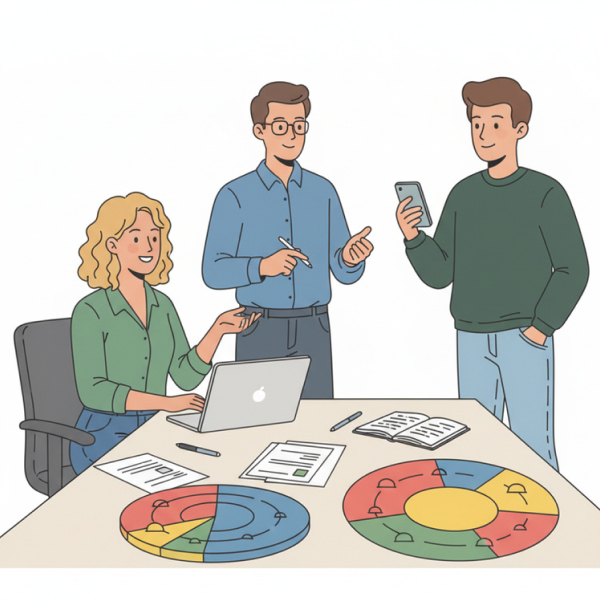
People-centric organizations succeed because they decode how individuals prefer to communicate, decide, and collaborate. This practical framework maps observable tendencies into a set of styles that explain why some conversations flow and others stall. Rather than labeling people, it gives language for DISCussing needs, motivations, and stress responses without judgment. Leaders use it to improve meetings, reduce friction, and design roles aligned with strengths. Individuals apply it to build confidence, negotiate expectations, and manage triggers with self-awareness.
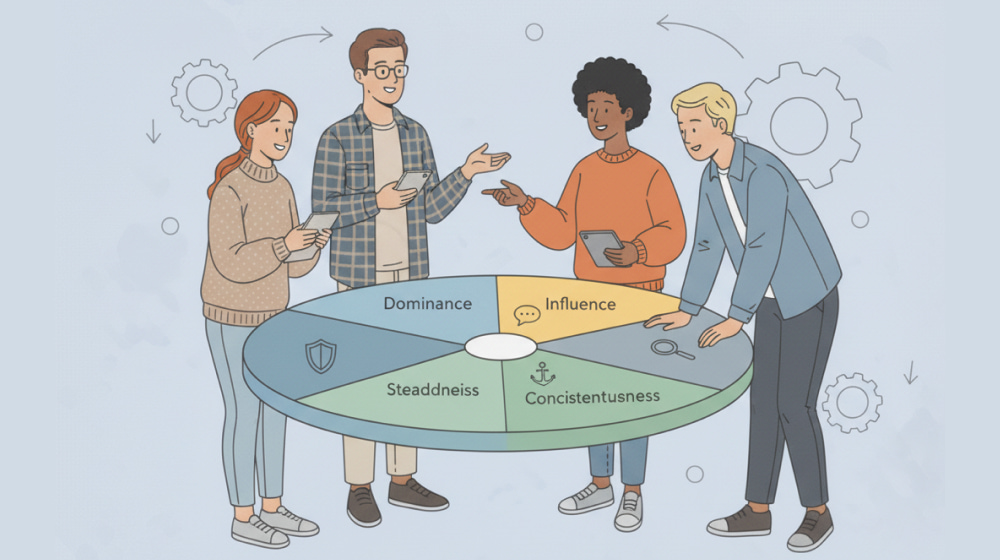
Across industries, the DISC assessment has become a staple because it translates abstract psychology into concrete, daily behaviors that teams recognize instantly. Its simplicity hides a sophisticated logic that links priorities, pacing, and perceived risk to interaction patterns. When teams adopt a shared vocabulary, conflict transforms from personal to procedural, which de-escalates emotion and accelerates problem-solving. Managers appreciate how quickly it becomes actionable, especially for onboarding and coaching rhythms. Many teams use a DISC profile to summarize these behavioral insights for quick reference.

Scholars have long noted that the framework aligns with the broader DISC model of human behavior, integrating dominance, influence, steadiness, and conscientiousness into a coherent map for interpersonal dynamics. This lineage gives the tool longevity and a cumulative evidence base that practitioners can trust. Organizations that institutionalize these insights see faster decision cycles, clearer role boundaries, and fewer misfires in high-stakes conversations. The result is a culture that rewards candor, respects differences, and turns stylistic diversity into a strategic advantage.
Take the TestRecognizing Nuance and Behavior Under Pressure
Modern platforms organize results around the widely recognized DISC model, which segments tendencies into four complementary patterns and highlights their interplay under pressure. This structure helps readers recognize nuance, like how a person may flex differently with peers than with executives. Before rollout, many teams pilot a brief DISC test to validate face validity internally and gather feedback about clarity, tone, and relevance. That dry run surfaces questions about terminology and ensures the narrative resonates with the organization’s culture. Data collection typically begins with a concise DISC questionnaire that asks respondents to prioritize descriptors, which minimizes survey fatigue while preserving psychometric rigor.

Benefits for Individuals, Teams, and Leaders
At a personal level, many professionals use the lens to articulate strengths and blind spots related to DISC personality, translating abstract traits into practical habits they can refine. Teams then build rituals that honor varied pacing and information needs, which noticeably improves project handoffs and meeting hygiene. Sales and service groups benefit from more precise call planning and better recovery skills when conversations derail.
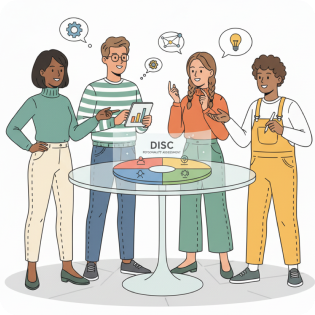
For departments that rely on coordination, a role-based DISC workplace profile is invaluable because it aligns communication norms with situational demands across functions. Cross-functional squads can codify how to escalate, how to document decisions, and how to balance speed with diligence. Executive coaches often integrate a targeted DISC leadership assessment to illuminate pressure-driven behaviors, enabling leaders to calibrate tone, delegate effectively, and model resilience when stakes are high.
Take the Test-
![]() Sharper self-knowledge that accelerates growth plans
Sharper self-knowledge that accelerates growth plans -
![]() Common language for giving and receiving feedback
Common language for giving and receiving feedback -
![]() Clearer stakeholder maps for influence and alignment
Clearer stakeholder maps for influence and alignment

Maximizing DISC Insights: Choosing the Right Format
Price-sensitive buyers often consider a DISC assessment free option to pilot the concept before funding an enterprise license, and that approach can work if the limitations are understood. The tradeoffs usually involve less nuance, minimal team analytics, and reduced reliability checks. A more advanced choice might add manager toolkits, quick-reference cards, and integration with learning platforms to support sustained behavior change. The decision should be anchored in the problems you are trying to solve this quarter, not hypothetical needs years away.
| Format | Best For | Pros | Cons |
|---|---|---|---|
| Self-serve online report | Individual insight and onboarding | Fast delivery, low cost, scalable | Limited depth without facilitation |
| Facilitated workshop | Team norms and conflict reduction | Shared language, practice scenarios | Requires skilled facilitator and time |
| Leader 360 package | Executive coaching and succession | Multi-rater input, targeted actions | Higher cost and admin overhead |
| Enterprise analytics suite | Org-wide trends and talent planning | Group heatmaps, comparative data | Learning curve and data governance |
Another practical consideration is whether your provider offers integrations with HRIS, learning systems, and collaboration tools, because that determines how easily insights show up where work happens. Look for content that speaks your industry’s language and supports accessibility standards for inclusive learning. Finally, confirm that your governance model addresses privacy, informed consent, and data retention, which sustains trust over time.
-
![]() Set clear goals and success metrics before launch
Set clear goals and success metrics before launch -
![]() Coach managers to model adaptive communication
Coach managers to model adaptive communication -
![]() Create visual aids and quick-reference cards
Create visual aids and quick-reference cards
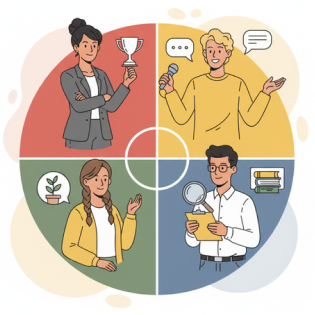
Interpreting the narrative often begins with a targeted DISC analysis that highlights default responses under stress and the likely tradeoffs people make when deadlines loom. Career conversations benefit from structured DISC personality profiling, which links strengths to role fit and development paths in a way that motivates action. Managers can map stretch assignments that build range without overwhelming the learner. When deeper exploration is needed, a formal DISC personality assessment gives comparative data across contexts so people can see where adaptation is easiest.
Take the TestSustained Success Through DISC Training
Rollouts stick when they are paced, purposeful, and reinforced. Start by defining the problems you want to solve, the audiences you will serve, and the decisions the tool should inform. From there, design a communication plan that sets expectations about time commitments, confidentiality, and how insights will be used. Pilot with a motivated cohort, gather feedback, and refine the playbook before scaling. Tie the initiative to real deliverables, performance cycles, project launches, or change efforts, so the learning has an immediate home.
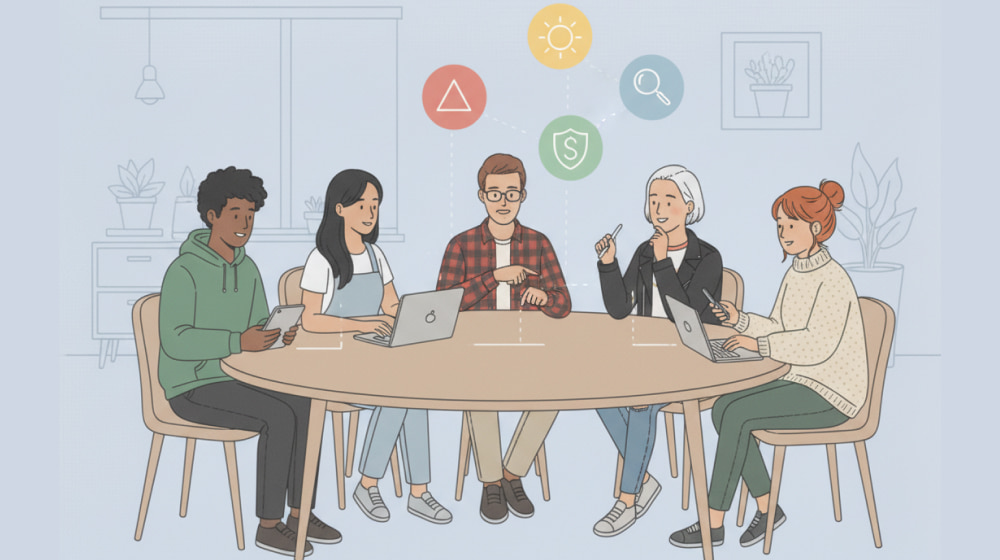
Sustained impact depends on habit formation, which means leaders should embed simple cues into existing rituals. Meeting agendas can include a prompt to consider pacing and information depth, while retros can include a style-aware reflection. For skill building, cohorts benefit from targeted DISC training that blends micro-lessons with role-play tied to real scenarios, ensuring the concepts move from theory to reflex. Managers can also use monthly check-ins to revisit agreements and celebrate small wins, which keeps momentum alive.
DISC Assessment Test: Discover Your Personality Profile
Get StartedFrequently Asked Questions: Practical Answers
- How long does the process take from invitation to debrief?Most implementations can collect responses in under 15 minutes and schedule debriefs within a week, though team workshops may require additional coordination for calendaring and prework.
- Can the results change over time as roles or stressors shift?Yes, behavior is context-sensitive, so people often show stable preferences with situational flex; promotions, new teams, or high-pressure projects can surface different patterns that are still authentic.
- Is the tool suitable for hiring decisions or only development?The instrument is best used to inform onboarding, coaching, and collaboration, while hiring choices should remain grounded in job-related competencies, structured interviews, and validated work samples.
- How do we explain the acronym succinctly to newcomers?A simple orientation can answer what does DISC stand for in a friendly way, while also emphasizing that the framework describes tendencies rather than fixed labels.
- What makes for an effective team workshop compared to a lecture?Interactive sessions that include real scenarios, role-play, and action planning outperform lectures because participants practice adaptation strategies and leave with concrete agreements they can execute immediately.
The Latest News
 DISC Behavioral Test: Definitive Guide for Work and Life DISC Assessment Test: Discover Your Personality Profile Get Started Understanding the Origins and Core Idea People everywhere want clearer language to describe how they prefer to act, decide, and interact under pressure. The DISC framework, inspired by William Moulton Marston’...
 - 10 December, 2025
- DISC Assessment: Benefits, Use Cases, and Practical Insights DISC Assessment Test: Discover Your Personality Profile Get Started Understanding the Framework and Why It Matters Human behavior tends to look unpredictable until you apply a clear framework that filters what you see into patterns you can actually use at work and in life. The four-...
- 9 December, 2025
- The Complete Guide to the DISC Profile for Better Work and Life DISC Assessment Test: Discover Your Personality Profile Get Started Understanding the DISC Model Fundamentals People bring distinct energies to communication, decision-making, and collaboration, and the DISC model offers a clear map of those tendencies. Rooted in observable behavior...
- 8 December, 2025
Please Note
This website (discassessmentclub.com) is not an official representative, creator or developer of this application, or product. All the copyrighted materials belong to their respective owners. All the content on this website is used for educational and informative purposes only.