
The Guide to a Free DISC Experience: Understand Behavior and Grow Faster
- 4 December 2025
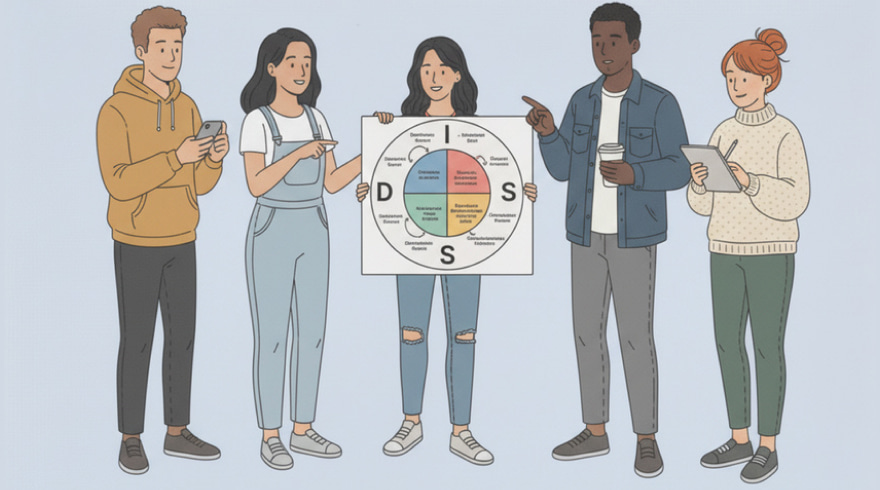
DISC Assessment Test: Discover Your Personality Profile
Get StartedWhat the DISC Test Measures and Why Accessibility Matters
DISC is a behavioral model that illuminates how people prefer to communicate, make decisions, and respond under pressure. By translating observable patterns into practical insights, it turns fuzzy interpersonal friction into understandable dynamics. Instead of labeling people, this approach highlights tendencies that flex with context, allowing you to adapt your approach at work and at home. With easy-to-read feedback loops, the framework helps individuals and teams collaborate with less guesswork and more empathy.
For many professionals, price is a hurdle that delays growth even when motivation is high. For learners who want to sample the model before investing, a DISC assessment free option offers a credible starting point. Because behavior is situational, a quick reading can be surprisingly actionable, especially when you pair it with reflection and micro‑experiments in real conversations. Even a short, guided self-check can reveal friction points that drain energy and create avoidable misunderstandings.
Access also matters for students, job seekers, and career changers who are sharpening communication skills. When budget is tight, many newcomers search for tools such as a DISC personality test free to compare against paid diagnostics. The goal isn’t to replace deep coaching but to remove barriers to first insights, create momentum, and build confidence before committing to a larger program.
- Clarifies how you react under deadlines, ambiguity, and feedback.
- Maps preferred communication channels and pacing expectations.
- Offers common language for managers, peers, and clients.
- Encourages self-awareness without pathologizing personality.
- Supports evidence-based adjustments in meetings and negotiations.
How a Free DISC Evaluation Works From Start to Finish
Most questionnaires present brief statements and ask you to choose what sounds most and least like you. The prompts cover pace, focus, risk tolerance, and social energy, creating a pattern that suggests your dominant and secondary styles. Modern interfaces are mobile-friendly, fast, and designed to reduce fatigue so your answers stay consistent. Reports often summarize strengths, pressure responses, and communication preferences you can test immediately in your next conversation.
Sampling the process reduces anxiety because you see exactly what to expect. If you prefer to try a short quiz first, you can begin with a DISC test for free and get a snapshot of your dominant tendencies. Many tools also offer brief interpretation notes, which help you translate scores into habits, phrases, and tactics you can apply right away at work or school. It’s a low‑risk entry point that still delivers practical value.
Comparison shopping makes sense in a crowded marketplace where quality varies widely. Educators often recommend a free DISC personality test as an orientation step before deep coaching. By exploring a concise instrument, you can calibrate your expectations, validate that the language resonates, and decide whether a more exhaustive report is worth the time. That way, you build clarity without overcommitting.
- Expect 7–15 minutes to complete typical forms.
- Answer honestly based on everyday behavior, not ideals.
- Skim the summary, then revisit it after a week to notice patterns.
- Pair insights with one small experiment in your next meeting.
Benefits You Can Unlock Immediately in Workflows and Relationships
Communication friction rarely comes from intent; it comes from mismatched pacing, detail depth, and decision rituals. When you can name those differences, you de‑personalize conflict and negotiate better norms. A concise reading can spotlight which situations energize you and which drain you, helping you schedule high‑stakes work when your strengths are most available. In teams, shared language accelerates onboarding and reduces misfires during feedback or project handoffs.
Teams exploring improvement ideas sometimes start with a free DISC test to spark conversation and reflection. Managers can use those insights to tailor check‑ins, adjust delegation, and choose meeting formats that fit varied engagement needs. Over time, these micro‑tweaks compound into smoother collaboration and clearer expectations.
HR generalists also appreciate a free DISC assessment test when running pilot workshops on communication styles. The data creates a neutral frame that encourages candor without blame, especially when everyone sees that each style brings indispensable strengths. Remote workers appreciate the convenience of a DISC assessment online free path available on any device. That inclusive access ensures distributed teams benefit equally, whether they’re in a home office or on the go.
- Faster conflict resolution with fewer assumptions.
- Better role alignment by matching strengths to task demands.
- Clearer coaching prompts for managers and mentors.
- Improved customer interactions via style‑flexing scripts.
Step‑by‑Step: Take the Test, Read the Report, Apply Insights Today
A smart approach starts with a realistic goal like “reduce back‑and‑forth in status updates” or “handle feedback calmly under time pressure.” Then you run the questionnaire, read the summary, and translate each insight into one behavioral experiment. If you want to practice before a big interview, consider taking a free online DISC assessment to rehearse how you explain your strengths. After that, test a new tactic in a small interaction, observe results, and iterate over a week.
To keep findings actionable, capture highlights in a simple worksheet and pair them with communication do’s and don’ts. After finishing, you can save a snapshot of your tendencies as a free DISC profile and review it during your next 1:1. If your attention span is short today, start with a bite-size DISC free test that finishes in minutes. The key is rhythm: brief tests, short experiments, quick reflections, steady improvement.
| Style | Core Drives | Communication Tips | Potential Blind Spots |
|---|---|---|---|
| D (Dominance) | Results, speed, decisive action | Lead with outcomes, be brief, propose options | Impatience, overlooking details, blunt tone |
| I (Influence) | Connection, enthusiasm, visibility | Use stories, invite input, affirm contributions | Over‑promising, distraction, lack of follow‑through |
| S (Steadiness) | Stability, harmony, support | Offer context, pace changes, provide reassurance | Resistance to quick pivots, avoiding conflict |
| C (Conscientiousness) | Accuracy, structure, quality | Share data, define criteria, outline process | Over‑analysis, slow decisions, perfectionism |
- Translate each style’s needs into meeting norms, e.g., agreed agendas and time boxes.
- Document one experiment per week and measure outcomes with simple metrics.
- Schedule periodic check‑ins to refine tactics with teammates.
Interpreting Results Responsibly and Turning Insight Into Habit
Any behavioral model is a map, not the territory. Your tendencies are dynamic, changing with context, stakes, and stress load. Treat your results as a working hypothesis to test; you’re exploring which tactics improve outcomes rather than proving a fixed identity. Self‑awareness becomes useful when it informs small, repeatable behaviors, like asking clarifying questions or adjusting the level of detail for a specific audience.
People who dislike downloads often choose a browser-based free DISC test online to avoid installing anything. That convenience is helpful, but remember to validate insights in real scenarios such as feedback moments, sprint planning, or client DISCovery calls. For deeper reflection, pair your report with a journaling exercise after a free DISC personality assessment to consolidate insights. Over time, this loop strengthens your ability to flex style and advocate for conditions where you and your colleagues do your best work.
- Revisit your notes quarterly to track growth and recalibrate goals.
- Invite a trusted partner to observe and offer gentle, specific feedback.
- Design prompts for tough situations, e.g., “Ask for criteria before debating.”
- Stay curious; treat differences as data, not drama.
FAQ: Common Questions About Free DISC Tools
How accurate are complimentary DISC questionnaires?
Brief instruments can be directionally solid when you answer candidly and avoid overthinking. Accuracy improves when you validate takeaways in real interactions and adjust based on outcomes. For nuanced development, longer reports and coaching add depth, but a concise reading still provides a useful foundation.
What’s the best way to prepare before taking a quick assessment?
Set a small goal for what you hope to learn, then answer based on your typical behavior rather than an idealized version. Avoid multitasking so your responses stay consistent. Afterward, test one practical tactic in a low‑risk conversation and reflect on the result.
Can I use these insights with my team without formal training?
Yes, start by agreeing on shared language and simple norms like agenda clarity and preferred feedback style. Keep it light and collaborative, and avoid labeling people. Consider a short workshop where each person identifies one strength and one growth habit to practice.
Do the results change over time?
They can shift with role changes, stress, and new environments. Periodic retakes help you notice evolving patterns. Treat results as a living snapshot and focus on behaviors that improve collaboration and outcomes.
What should I do if my report doesn’t feel accurate?
Use it as a hypothesis and gather evidence from real scenarios. Ask colleagues for specific observations, and compare how you act under calm versus high pressure. If patterns consistently diverge, try a more in‑depth instrument or consult a coach for personalized guidance.